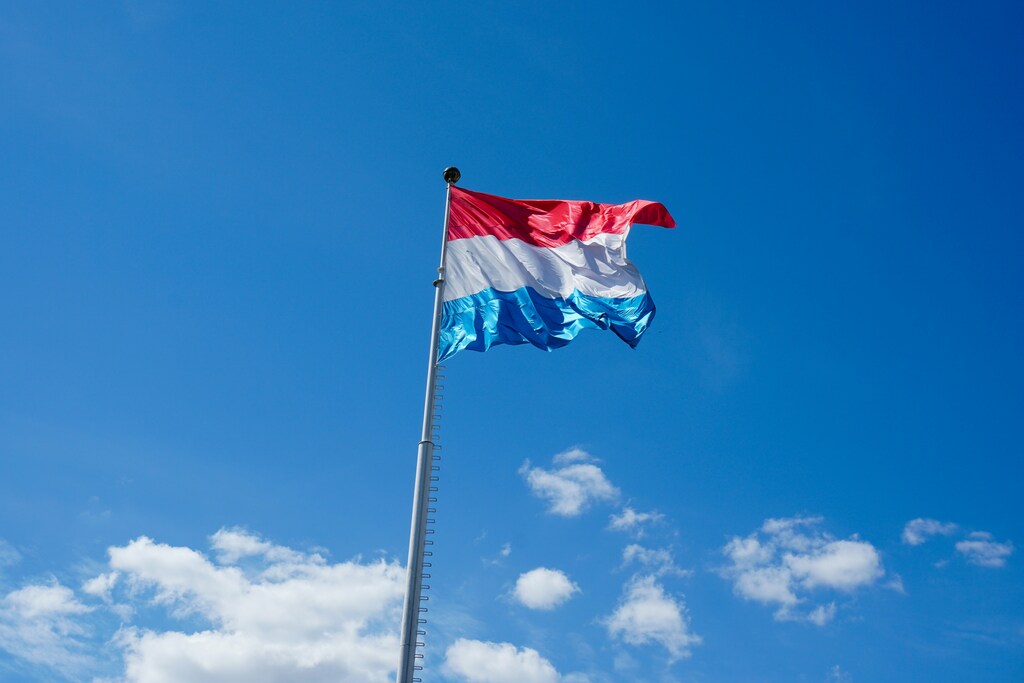
Why Transparency Matters for Luxembourg
Luxembourg sits at the crossroads of Europe's political and financial systems.
As a prominent global financial centre, it serves as a vital hub for investment funds and transnational finance, hosting key EU institutions. Developments here have far-reaching implications beyond our borders, not only for Europe but also for the global architecture of financial integrity and anti-corruption enforcement.
Luxembourg also has a strong track record: it scores well on rule‑of‑law indicators and routinely ranks among the world's top 10 in Transparency International's Corruption Perceptions Index (although its score has dropped from 81 to 78 and its global ranking has slipped from 5th to 8th in the latest CPI report for 2025). The country has ratified key UN, OECD and CoE anti‑corruption conventions1, introduced a parliamentary lobby register and codes of conduct for senior public officials2, strengthened anti‑money‑laundering rules, and put in place legal protections for whistleblowers.
However, this is only part of the picture. Although Luxembourg has made significant strides in combating corruption, its approach still relies heavily on criminal law and case-by-case enforcement, with relatively few foreign bribery investigations and prosecutions, limited use of proactive detection tools, and sanctions that, according to the 2024 OECD Working Group on Bribery report, are not always sufficiently dissuasive. Broader anti-corruption measures—such as systematic corruption risk assessments, coordinated prevention strategies, and dedicated, independent institutions with a clear mandate3—are only just emerging.
Enforcement practice also needs to adapt to a context in which foreign anti-bribery regimes such as the UK Bribery Act and France's Sapin II law increasingly shape expectations for multinational companies operating in Luxembourg, and where the risk of extraterritorial investigations and overlapping sanctions is real.
In a nation that plays a crucial role in European finance and EU decision-making, these gaps are not mere technicalities; they significantly influence the ability of systems to improve and adapt.
The need to adapt was intensified following the agreement between the European Parliament and the Council of the EU on the union's first anti-corruption directive on 2 December 2025. Intended to harmonise criminal laws on corruption and set a zero-tolerance approach, the directive was softened during negotiations. Civil society groups that advocated for a stronger instrument consider the final framework to lack ambition, clarity and enforceability, placing even greater responsibility on member states like Luxembourg to go beyond minimum standards. This responsibility is underscored by Luxembourg's economic profile: a small domestic market with a very open economy, large inward and outward FDI and where many companies are foreign-controlled or structured as holding vehicles - conditions that sustain its high exposure to foreign bribery and money-laundering risks.
Luxembourg stands at a pivotal moment: one path leads to merely meeting the minimum requirements of the forthcoming EU directive and related international standards, while the other offers a more coherent and forward-looking integrity architecture, with civil society recognised as a vital partner. Luxembourg for Transparency (L4T) is here to facilitate the latter path.
Why do we choose to be "for transparency" rather than simply "against" corruption?
The name "Luxembourg for Transparency" was chosen purposefully. While being "against corruption" is essential, it defines us by what we oppose. Being "for transparency" and integrity defines the society and world we aspire to help shape.
We are for a Luxembourg where public power and private influence are exercised in the public interest; where decisions can be questioned and understood; and where individuals and communities have a genuine voice in the governance that affects them. Our focus is on designing systems that make domestic and transnational corruption and other financial crimes more difficult to perpetrate, rather than solely denouncing them after the fact, recognising that these are not merely economic offences but symptoms of deeper unfairness, inequality, and inefficiency in the way governments and institutions function.
L4T aims to achieve this through fair-minded, evidence-based perspectives, rigorous research and advocacy, the advancement of new standards, and practical solutions, mobilising multi-sectoral collective action — bringing together government authorities, businesses, media, and civil society — and empowering the public.
Our focus includes:
- Analysing how systems and practices create opportunities for corruption, conflicts of interest, undue influence and illicit financial flows;
- Supporting the effective implementation of Luxembourg's national and international obligations;
- Promoting positive values and high ethical standards in public institutions and the private sector; and
- Equipping journalists, professionals, civil society actors and the general public with tools to demand transparency and engage with decision-makers.
We are committed to driving change through sustained, constructive advocacy, collective action, and providing support to others whose efforts align with our mission.
This means working alongside—rather than against—institutions and businesses willing to improve, while remaining independent, politically non-partisan, and ready to speak candidly when standards fall short and accountability is lacking.
Our core values—transparency, integrity, accountability, and courage—shape both our priorities and our methods. We view accountability as an act of courage and believe that protecting democratic checks and balances is a collective responsibility across society.
International frameworks — from UNCAC to the 2030 Agenda for Sustainable Development — consistently link transparency, public participation and integrity, and recognise civil society as critical for translating legal obligations into everyday practice. For Luxembourg, defining an effective national anti‑corruption strategy and deciding whether and how to create a dedicated anti‑corruption authority should follow a consultative, evidence‑based pathway: comprehensive corruption‑risk assessments; broad stakeholder consultation (including civil society, judiciary, financial sector, parliament and EU partners); clear legislative mandates aligned with UNCAC and the 2025 EU anti‑corruption directive; and built‑in safeguards for institutional independence, adequate resourcing, preventive and investigative powers, accountability and inter‑agency cooperation. Grounding reform in international best practice and ongoing public oversight will help ensure that policy commitments become measurable and sustainable.
Why prioritise transparency?
The antidote to corruption, bribery, and related crimes is not simply transparency; it is, however, the essential starting point. Without timely, accessible, and reliable information, meaningful oversight, informed public debate, and credible accountability are unattainable.
For Luxembourg, transparency is also a strategic asset. Clear and enforced regulations on lobbying, accessible and usable data, meaningful access to information, robust beneficial ownership disclosure, and traceable decision-making processes all contribute to:
- Protecting honest public officials and businesses from unfounded suspicion;
- Reducing the risk of capture by narrow interests;
- Enhancing the country's appeal to responsible investors and talent; and
- Maintaining public trust in institutions amid growing geopolitical anxieties across Europe.
Moreover, Luxembourg's demographics make a deeper culture of transparency both necessary and achievable. With a young, diverse, and highly educated population, and nearly half of residents born abroad, the country is well-positioned to adopt more dynamic, participatory forms of inclusive governance.
Engaging young people and emerging leaders is therefore a central focus of L4T's work. Through civic education, accessible analysis, and inclusive engagement, we aim to equip the next generation to recognise, question, and prevent corrupt practices and financial misconduct in public life and the economy.
By placing transparency at the core — and intertwining it with integrity, accountability and public participation — Luxembourg can not only manage its risks but also bolster its reputation as a trusted, forward‑looking financial and institutional hub. Beyond this, it can deepen its identity as a vibrant, diverse society where people not only come to work, but also build their lives and take part in public life with confidence that decisions are transparent, understandable and genuinely people‑centred.
L4T's role is to support that journey: by providing impartial analysis, advocating for robust standards, enabling collective action, and standing alongside those in Luxembourg who are committed to a more transparent, fair, and accountable future.
1 United Nations Convention against Corruption (UNCAC), Organisation for Economic Co-operation and Development (OECD), Council of Europe (CoE), European Union (EU).
2 Luxembourg's parliamentary lobby register, which applies only to formal meetings, was initially established in December 2021 by the Chamber of Deputies. Its mechanisms were subsequently updated in June 2021, with new regulations taking effect on 15 September 2025. Under these reforms, lobbyists are no longer required to pre-register prior to formally meeting with an MP; instead, deputies must now declare meetings with interest representatives after they occur. The updated register also requires the inclusion of the meeting's subject and the names of the deputies involved.
3 According to the 2025 EU Rule of Law Report, the Corruption Prevention Committee (COPRECO) is exploring the development of a formal anti-corruption strategy. Concrete measures for implementing the OECD's recommendations are expected to be presented in early 2026, along with possible adjustments to COPRECO's functions. Currently, COPRECO serves as a consultative interministerial body. Under UNCAC, parties are mandated to establish an independent entity to oversee and coordinate preventive anti-corruption policies. Additionally, the Office of Whistleblowers, which was established in 2023, is poised to release its inaugural activity report.